
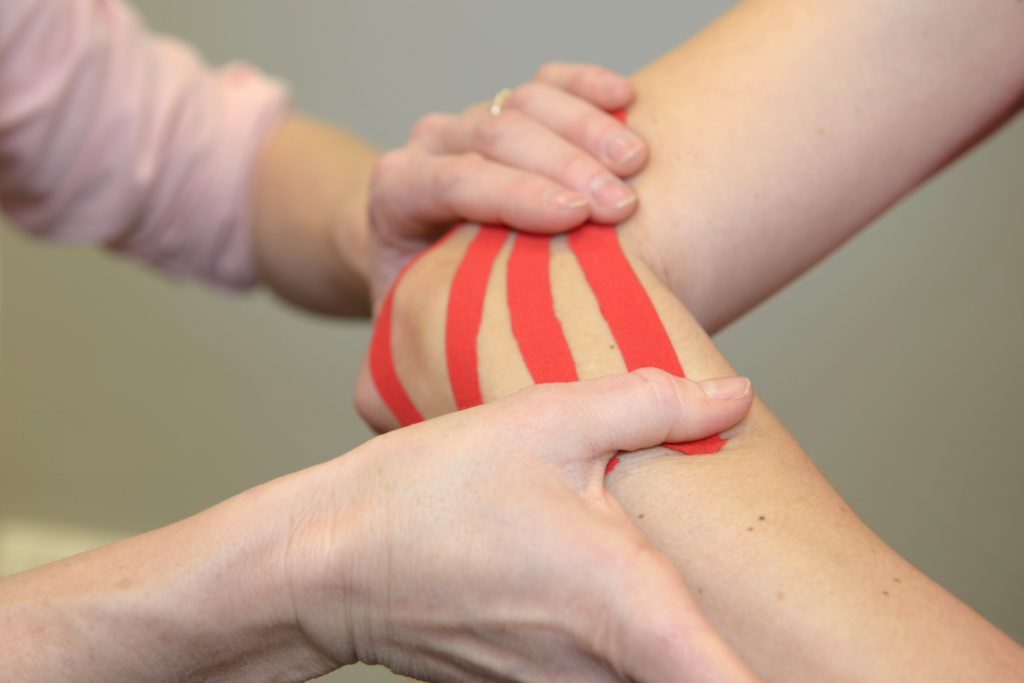
Tennis elbow

Article content

Tennis elbow is pain on the outside of your elbow. It is possible that you never held a tennis racquet in your had and yet leave your general practitioner or orthopedist with this diagnosis. The pain presents itself almost always when you are shaking someone’s hand or even try to bring a cup of tea to your lips. At first the pain is not too bad and you can ignore it. However, once you start to develop pain at rest, it is time to do something about this. Luckily, in most cases your best treatment option is conservative.

What is tennis elbow

Lateral epicondylitis is a medical term for tennis elbow. The painful area is right on the outside bony part of your elbow, sometimes it radiates into your forearm. The extensor tendons are injured at the the insertion into the bone. The muscle we can blame most is the extensor carpi radialis brevis. This muscle participates in turning your palm forward with your elbow extended and with the elbow flexed turns the palm down. When the extensor tendons se overloaded with repetitive motion, they can get inflamed causing pain.

Causes

Tennis elbow is caused by repeated movements of the wrist that overload the forearm tendons. It is most common in manual laborers, like painters, plumbers, mechanics and you have guessed, tennis players.

Treatment
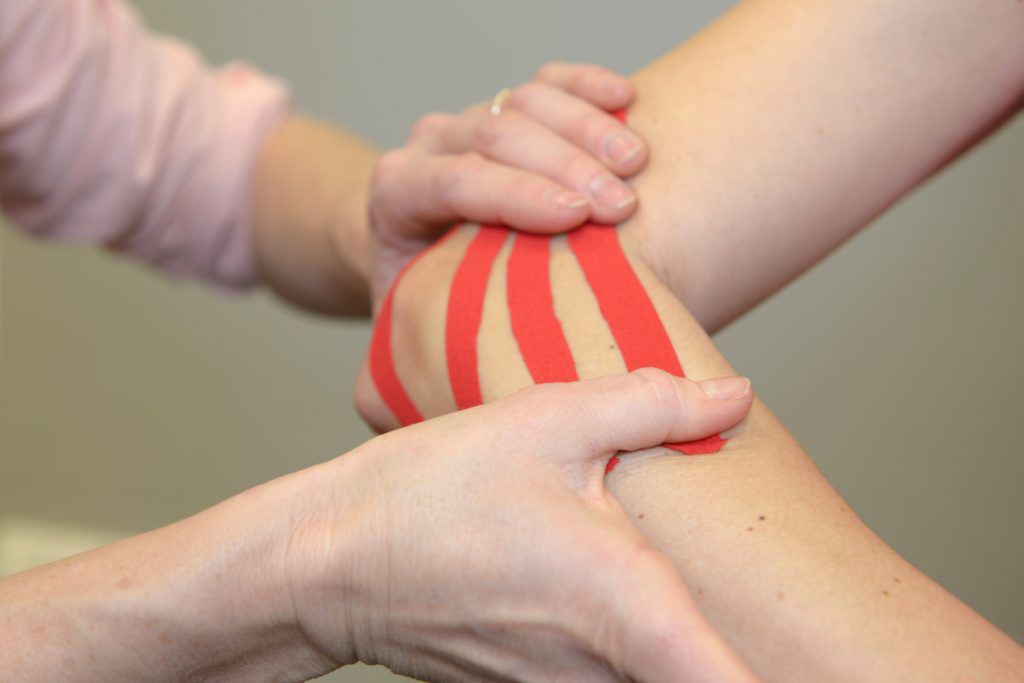
Tenisový loket
Taping is an effective way of supporting the painful elbow

If your symptoms started less than a week ago, rest and icing your elbow will most likely be enough. However, if you are struggling with this condition for longer, the first treatment choice is physical therapy. Physical therapy uses therapeutic exercises, manual therapy, taping and other modalities to reduce pain and assist with the healing process.

Your physical therapist can also help you determine why you developed tennis elbow and can implement postural correction to help you prevent it after you finished your rehabilitation.

Visit Prague Physical Therapy

For individual help schedule an Physiotherapy evaluation here. I look forward to meeting you,Magdalena Pertoldova

Share this article:
Share on facebook
Share on twitter
Share on whatsapp
Share on email
Share on linkedin
More articles
DNS exercise

Learn about Dynamic Neuromuscular Stabilization (DNS)—a diagnostic and therapeutic concept rooted in movement science and posture.

Read more
Pilates Exercise

Explore the mind-body Pilates method, founded by Joseph H. Pilates in the early 1900s, and its benefits for strength, flexibility, and core stability.

Read more
Cookies

Cookies refer to small text files that are placed on a user's device (such as a computer or smartphone) when they visit a website. Essential cookies, which are necessary for the basic functioning of the website, may be exempt from the consent requirement. Non-essential cookies, such as those used for analytics or advertising, will require your consent.

Strictly Necessary Cookies

Strictly Necessary Cookies are enabled at all times to support basic functionality of the website such as authenticating registered users.

Stripe is our payment processing provider. If you use the online payment system, Stripe may use cookies to ensure a seamless and secure payment experience. This information is crucial for processing transactions and is handled in accordance with Stripe's own privacy and security policies, outlined at https://stripe.com/en-cz/privacy. By using our website and opting to make payments through Stripe, you acknowledge and agree to the use of essential cookies for payment processing purposes.

Analytics Cookies

This website uses Google Analytics to collect anonymous usage statistics such as the number of visitors, and the most popular pages. Keeping this cookie enabled helps us to improve our website. Google Analytics is enabled only after your explicit consent. You can change your cookie preferences at any time by using the link in the footer of the page.